Sleep and the Heart: Why Rest Matters
An NIH Scientist's Guide to Sleep, Circadian Timing, and Cardiovascular Health
Generated July 3, 2026
Chapter 1
Introduction: Sleep, the Heart, and a Big Question
Meet the Researcher and the Question
Michael J. Twery has led the sleep program at the National Heart, Lung, and Blood Institute since 1996, and since 2006 he has directed the National Center on Sleep Disorders Research. The Center administers a wide range of clinical research programs and coordinates all federally funded sleep research activity. Twery also runs the Sleep Disorders Research Advisory Board, a federal advisory committee that represents sleep disorder patients, health care providers, and biomedical researchers in identifying needs and opportunities for sleep research.
The board's major emphasis is improving understanding of how light, circadian rhythm, insufficient sleep, and untreated sleep disorders affect human development, health, and achievement over a lifetime. Twery also led efforts to recognize sleep health as a focus area within the HHS Healthy People 2020 initiative, helping establish national objectives for improving sleep health.
Twery earned his Ph.D. in pharmacology at UNC Chapel Hill, was a member of the research faculty at the University of Texas Medical Branch, and served as a senior staff fellow at the National Institute of Neurological Disorders and Stroke before joining NHLBI. In 2001 he was recognized for his dedication to sleep research with a joint award from the American Academy of Sleep Medicine and the Sleep Research Society, and in 2015 he received the Mark O. Hatfield Public Policy and Advocacy Award from the American Academy of Sleep Medicine.
Consider a memory familiar to almost anyone: getting tired as a child, coming in from playing outside, and hearing a parent's remedy. Chicken soup was one part of it, but the more consistent advice was simpler—go to bed, get a good night's sleep, and you'll feel better tomorrow. That advice raises an obvious but surprisingly difficult question: why does sleep make you feel better?
When the National Center on Sleep Disorders Research was created by an act of Congress in 1993, that question had no real answer. Since then, tens of thousands of publications have begun to unravel the mechanics of why sleep works, and the picture that has emerged is far more involved than most people would guess. Feeling sleepy when tired is only part of the story. A driver struggling to stay alert on a familiar commute may feel as though the trip went by unusually fast—a sensation that is often a sign of micro-sleeping, brief unintended episodes of sleep, rather than simple inattention.
Given the scope of that research base, what follows is necessarily a summary rather than an exhaustive survey—an attempt to distill roughly 16,000 publications into a single readable account, drawing on biomedical research to which NIH has been a major contributor. The path ahead is deliberate: it begins with the heart, then turns to sleep itself, then to the connection between sleep and heart health, and closes with practical health tips.

The Heart's Relentless Work
The heart looks unremarkable at first glance: a small structure sitting near the center of the chest, slightly off to one side, and not particularly heavy. But its workload is extraordinary. It pumps over 2,000 gallons of blood a day, moving about one-third of a cup with every beat, and it does this continuously across an entire lifetime. On average, it contains about 2 billion heart muscle cells, and it simply has to keep working—there is no substitute organ standing by.
What makes this workload especially significant is that heart muscle cells are not thought to replicate rapidly. If they are replaced at all, the process is very slow. That single fact carries a practical consequence: because the heart largely cannot fix itself, the responsibility for keeping it functional falls on everyday habits. This is why doctors emphasize eating well and exercising—not as generic advice, but as the main lever available for protecting an organ that has almost no capacity for self-repair. The very slow, possibly nonexistent, replacement rate of heart cells remains an open area of research.
The heart's output travels through an equally striking network. Blood moves through about 60,000 miles of blood vessels in a single person—roughly two trips around the Earth. The body holds about five quarts of blood containing some 25 trillion blood cells, and unlike heart muscle cells, these blood cells are replaced on a much faster cycle, over days to months. Almost none of the blood cells in the human body last forever; they turn over continuously, even as the heart muscle itself changes only very slowly, if at all.
When Arteries Harden
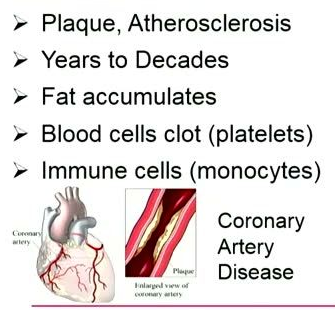
With the heart's workload and its blood vessel network established as background, the next question is what can go wrong—which sets up the eventual link to sleep. The most familiar problem is hardening of the arteries, known as atherosclerosis. Over years to decades, fat accumulates within blood vessel walls, clumping together with clotting blood cells called platelets and immune cells called monocytes. Together these components build up and obstruct major blood vessels.
That obstruction has a direct mechanical consequence for the heart: it must push harder and work harder to move blood through narrowed passages. This added strain lands on an organ that is already beating 60 times a minute or faster around the clock, with almost no ability to repair or replace its own muscle cells. The combination of relentless demand and diminished vessel capacity is what makes atherosclerosis, or coronary artery disease, a central concern for heart health.
A second, related category of heart and blood vessel disease is weakening of the heart muscle, or cardiomyopathy, which encompasses many types. Its causes include high blood pressure, impaired energy supply to the heart, and infections, and like atherosclerosis it can develop over years to decades. Together, hardening of the arteries and weakening of the heart muscle round out the essential background on heart and blood vessel disease before turning to sleep itself and, eventually, to how the two are connected.
Chapter 2
Sleep as a Public Health Issue
How Heart Disease Develops Over Time
The disease process behind high blood pressure is a familiar one, but its timescale is easy to underestimate: it takes years to decades to develop into something noticeable, and it is always at work in the background. This slow accumulation is exactly why wellness and health advocates push so hard for eating right and exercising now, while there is still time to catch the process before it becomes serious. When occlusions, or blockages, occur in the heart's vessels, the result is coronary artery disease.
One consequence of this long-term damage is a weakening of the heart muscle, known technically as cardiomyopathy, of which there are many different types. As already noted, it takes a long time for this weakening to become clinically significant, and high blood pressure is one of the main forces driving it. But some of the underlying mechanisms are not things a person feels day to day, and they are not always top of mind for a treating doctor, because they remain active areas of research. Two such mechanisms are how the heart muscle actually contracts and how it obtains enough energy to keep contracting reliably.
Infections matter here too. Certain serious infections can damage the heart muscle directly, causing it to enlarge and leaving damage that persists for the rest of a person's life. Taken together, these threads point to a set of everyday requirements for a healthy heart: healthy lipid levels maintained through proper eating and metabolism, an immune system capable of fighting off infection, and the right kind of energy delivered to body tissue at the right time.
An Epidemic of Insufficient Sleep
Turning from the heart to sleep itself raises an immediate, personal question: did everyone get enough sleep last night? For most people in most rooms, the honest answer is no, and that shortfall is not an isolated experience. The CDC, only in the last couple of years, has begun asking about sleep as part of its regular health surveillance monitoring. This is genuinely new data, drawn from 2014. Historically, the CDC has tracked things like dog bites and infectious disease as public health indicators; the recent addition of insufficient sleep to that list marks a shift in how seriously sleep is now being treated as a health measure.
The data itself, mapped across U.S. states, shows a striking pattern. In the Gulf states and parts of the central United States, only about 50 to 60 percent of adults report getting enough sleep, meaning roughly seven hours or more per night. On its face, 50 to 60 percent might not sound alarming.
But consider the comparison: if a disease or health threat affected 30 to 40 percent of the people in these states, it would be called an epidemic without hesitation. A health threat affecting just 10 percent of the population, such as a flu outbreak, is already labeled an epidemic. By that same standard, insufficient sleep, affecting 40 to 50 percent or more of adults in many states, is a big problem across the country.
What Sleep Does for the Mind and Relationships
Waking up in the morning and going to sleep at night are so routine that it is tempting to think of them as simple bookends marking each day. But the more important question is what happens in between: from the moment sleep begins to the moment a person wakes, a kind of quiet miracle is underway, and biomedical research has been steadily uncovering new clues about what that miracle involves.
Sleep contributes to motivation and inspiration, and it helps people learn, a process scientists are now working out at the level of individual brain neurons. It also supports memory, though in a nuanced way: when a person is not well-rested, memories tend to be colored more negatively, a finding researchers have demonstrated elegantly in controlled studies.
Vigilance, the ability to stay alert and responsive, is especially consequential for the many people who drive. If the brain is not fully engaged at the exact moment alertness is needed, real trouble can follow. When a person is very sleepy, the brain can effectively switch on and off without any conscious control or awareness, a phenomenon known as microsleep. The telltale sign is a familiar drive that seems to pass unusually quickly, with details missing from memory. Microsleep episodes themselves are brief, roughly half a second to a second, comparable to missing frames from a movie that make the whole sequence appear to speed up.

Beyond alertness, sleep shapes judgment and emotional regulation, which together form much of the substance of how people function in society: the ability to interact, to communicate effectively, and to respond to others in an intelligent, rational manner rather than reacting poorly. Emotional regulation in particular is tied to energy. Running low on energy and becoming tired places a drag on emotional reserves.
One way people restore that reserve is by eating, which is part of why so many people snack while watching a football game or sitting in the office in the afternoon; eating a bit of food and drinking soda provides energy, but the effect is not purely nutritional. There is also a neurological effect tied specifically to emotional regulation.
Judgment follows a similar pattern. The speed and quality of decision-making, especially in situations that demand a quick call, measurably improves when a person is rested and measurably degrades as wakefulness drags on. Researchers have demonstrated this relationship in a quantitative way, confirming what many people sense intuitively about their own sharper or duller moments.
All of these effects, taken together, ripple outward into relationships with other people. For anyone in a marriage or raising children, the capacity to work and communicate well with loved ones, which forms the basic fabric of society, is shaped by how awake a person is and how much emotional reserve remains. Ultimately, these daily patterns of alertness and emotional capacity accumulate into something larger: a person's accomplishment across the entire lifespan.
- Learning and memory, supported by processes now being traced to individual brain neurons
- Vigilance, particularly critical during driving, where lapses take the form of microsleep
- Judgment, including the speed and quality of decisions made under time pressure
- Emotional regulation, which weakens as energy runs low and can be partly restored through eating
- Relationships, since alertness and emotional reserve shape communication with loved ones
Chapter 3
The Body's Inner Clock
Sleepiness, Fatigue, and the Need for Correct Timing
Performance suffers when people are not fully awake. Going to school or trying to hold down a job while under-slept drags everything down. Sleep loss may not be the single root cause of every problem, but it factors into so many outcomes that matter for public health that it deserves close attention.
The felt sense of sleepiness and fatigue is not a mystery of willpower — it has a location and a mechanism. There is a chemistry in the brain that produces the perception of being sleepy or worn out. Because that perception is chemical, it can also be manipulated: taking a nap is a genuine remedy.
In carefully controlled studies, researchers have found that if people accumulate roughly nine hours of sleep a day — whether through naps or shorter broken sleep periods — many can remain awake well enough to do demanding work such as driving a truck or flying an airplane. People vary in how well they manage this, but it demonstrates that the subjective feeling of sleepiness can be reduced without necessarily restoring everything sleep is meant to provide.
That last point is the hinge of the whole chapter: the research says it is not just about what a person feels in their head. Function also depends on getting enough sleep, sleep of good quality, a sensible schedule, correctly timed sleep, and the right dose of light. All of these elements have to come together, and they have to happen at the appropriate biological time — which for most people is at night, typically somewhere between 9 or 10 p.m. and 6 a.m. or later. During that window, a whole biological process unfolds. That process is what is sometimes called biological timing, and its technical name is the circadian clock.
A Clock in Every Cell
The reason the circadian clock deserves a chapter of its own is that this timing function is a part of every cell in the body — every nucleated cell, without exception. Heart cells, brain cells, and anything else that has a nucleus carries a biological clock that is ticking away inside it. One of the open questions researchers are still working to unfold is how the clocks in all these separate tissues — the brain, the heart, the lungs, the immune system — stay properly scheduled relative to one another. That coordination is not yet understood, but it remains an exciting area of continued research.
What is this clock actually doing inside a cell? It is controlling proteins, genes, and the metabolism of cells, and it affects the way disease develops. This is a genuinely new area of research — the surface has only just been scratched. One striking illustration comes from what happens when viruses infect cells: viruses take over a cell's nuclear machinery to reproduce themselves, and in doing so, many of them also alter the circadian timing of the infected cell. The cell's clock no longer runs on its normal period; it becomes abnormal, and that abnormality contributes to the disease process itself.
This kind of timing is not a peculiarity of human biology. Nearly every cell on the surface of the planet — humans, animals, plants, microbes, almost everything — carries a circadian clock or something like it. Evolutionarily, scientists believe the purpose is to synchronize biological function with the availability of light. Light matters because it is a source of energy: whatever people eat, whether cows, fish, or plants, the energy in that food originally came from the sun.
This is tied to the solar cycle in a deep way — sunlight is associated with wake and feeding, and there is a whole chemistry best prepared for being awake and eating. A separate chemistry is most closely associated with sleep. When the body is not eating, it shifts gears into that other chemical state, and there is now direct chemical evidence that this shift really happens.
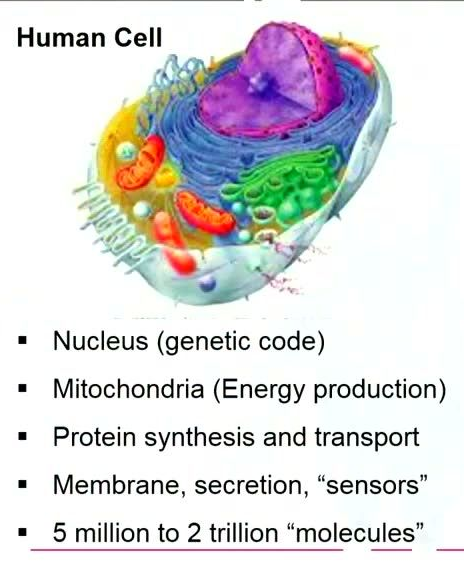
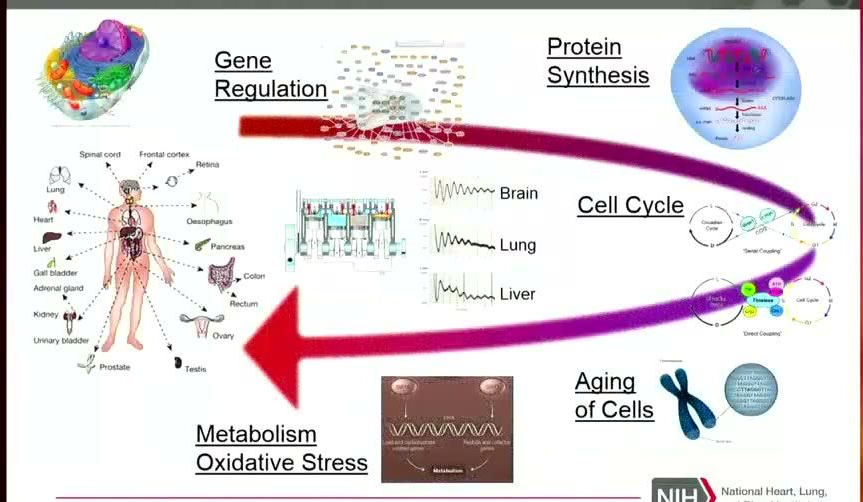
A useful way to picture this is to look inside an actual human cell. It has a nucleus containing the genetic code. Scattered through the cytoplasm are mitochondria — the orange, sausage-shaped structures associated with energy production. The rest of the cell's tissue is largely occupied with protein synthesis and with moving those proteins from the nucleus out to the membrane or wherever else in the cell they are needed.
Many cells need to secrete hormones or other substances as part of their basic function, and there are also proteins on the cell's surface dedicated to sensing its environment — detecting, for instance, whether there is too much sugar present so that more insulin can be produced. All of this protein production is tied, in a clock-controlled, time-of-day-dependent manner, back to genomic function in the nucleus. This is one dimension of how the estimated 5 million to 2 trillion molecules within a cell stay organized — genuinely new science.
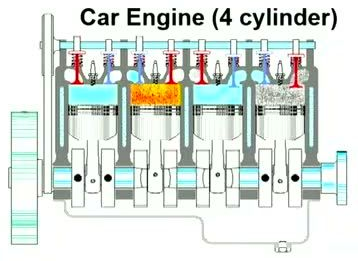
To make this idea more concrete for people unfamiliar with cell biology, consider a comparison to a gasoline engine — a four-cylinder engine has no genetic code and no DNA, but it does have about 2,000 moving parts. What is notable is that all 2,000 of those parts have to move at the right time for the engine to run. Biology works the same way: the same is true of energy production in cells, of oxidative stress, and of injury and repair processes. For cells to work at their best, timing has to be correct, and the circadian clock is one of the major mechanisms — discovered only in the last twenty years — that accomplishes this. And all of it comes back, ultimately, to sleep and wake.
Timing, Tissue Renewal, and Aging
Returning to the engine comparison: there is no genetic code and no DNA in a gasoline engine, but it does have roughly 2,000 moving parts, and all of them have to move at the right time. The same holds for biology — for energy production in cells, for oxidative stress, and for the processes of injury and repair. It is essential, for cells to work at their best, that timing be correct, and the circadian clock is one of the major mechanisms discovered only in the last twenty years to accomplish this, driven ultimately by sleep and wake.
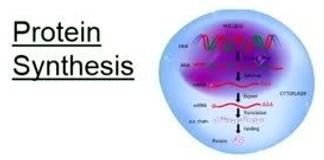
Biological timing in cells starts with gene regulation — a map of genes — and extends to protein synthesis: the process of going from DNA, from the genome, to RNA, and eventually to an actual, properly formed protein. Without energy, and without that energy being available at the right time, diseased or abnormal molecules get produced instead, and those do not help cells function.
Circadian timing is also closely linked to the cell cycle — the process by which cells replicate. Heart cells do not replicate, but skin cells do, which connects to a familiar piece of media advice: get a good night's sleep to help preserve complexion and slow the aging process. That is one small piece of an active area of research, but it does not stop with skin.
The lining of the gut and intestine is replaced very quickly, and that rapid renewal is necessary for staying well. Research has also connected circadian timing to genome-aging processes — telomeres is the technical term — with the underlying point being that the processes protecting the genome from aging are associated with well-functioning circadian timing.
Metabolism and oxidative stress fit into this picture as well. Clock genes located in the cell nucleus regulate the function of mitochondria, and mitochondria in turn send signals back to the nucleus — a two-way relationship happening in almost every cell in the body. This is not confined to the brain: it occurs in the lungs, heart, liver, gallbladder, and essentially every other organ. There is no nucleated cell in the body where a clock gene has not been found.
That the rhythm is intrinsic to the tissue itself, rather than something imposed only by the brain, can be shown directly: if a chunk of brain, lung, or liver is removed and placed in a culture dish, gene expression continues to track up and down for a time, marking days as it goes. Eventually the tissue dies, and the rhythm dies with it — but while it lasts, this demonstrates that each tissue carries its own clock, even though under normal conditions the brain regulates the entire symphony of this biology.
Day and Night Rhythms in the Body
Another way to see this timing system at work is to look at when specific body functions peak across the 24-hour day. Thyroid-stimulating hormone, growth hormone, and melatonin each have a peak time of secretion. Lymphocytes and other components of the immune system peak at particular times in the blood. Stress hormones such as cortisol have their own rhythm, as does plasma renin activity, which helps regulate blood pressure, along with aldosterone and catecholamines — the chemical family that includes adrenaline. Blood pressure, heart function, blood coagulation, and other processes all vary with time of day.
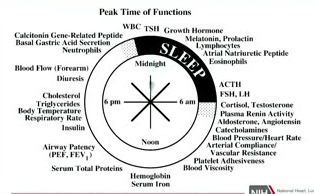
The general organization behind all of this is that the body has evolved to provide the chemistries that support life and help deal with stress during the daytime, while repairing and recovering at night. That is the broad pattern, and it explains why simply shifting sleep later, or cutting it shorter, is not a neutral act — it works against the body's built-in division of labor between day and night.
Consider what actually happens when someone stays up late — watching a show, going out to a party — and loses an hour, two hours, or three hours of sleep. Many college students sleep only four or five hours a night, and many people, of any age, try to get by this way regularly. What matters here is that sleep is not simply a matter of turning the brain off and picking up again later.
During sleep, the brain reorganizes its own activity, moving through distinct stages. That organization changes across the night — one way it changes is that REM periods, rapid eye movement sleep, shift throughout the night. They change because these patterns are needed to signal the secretion of other chemistries, including the stress hormones already described.
When sleep is cut short, the effect is not simply less sleep — the full pattern does not get completed. The cycles of sleep are not all obtained, and when those cycles are missed, the hormones tied to them are not secreted as they should be. Over time, this snowballs into disease and metabolic problems. It is easy to dismiss this because staying up once to watch an election, for example, clearly does not cause immediate harm — but that single late night is not what is being described here. The concern is lifestyle: a repeated pattern of short sleep that compromises the architecture of sleep night after night.
Chapter 4
Light, Wakefulness, and the Drive to Sleep
Light as the Wake Signal
Wakefulness begins with light. This can be hard to appreciate, since so much of modern life is spent indoors, but human beings evolved with eyes built to read the presence and quality of daylight as a primary signal for staying alert. The retina is not a simple light detector; it houses a complicated chemistry, with different types of molecules and cells that send signals in more than one direction. Most people know that the retina communicates with the master clock, technically called the suprachiasmatic nucleus, which then sends wake-up signals onward to the cortex. But the retina also sends light signals directly to the cortex, bypassing the master clock altogether.
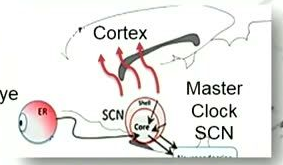
This second, more direct pathway is a relatively recent discovery. Researchers have only in the last few years begun mapping the connections between the eye and the cortex that are separate from the master clock, and early findings suggest these connections modify how the thinking brain works and may be important for mood.
Seasonal affective disorder offers a familiar illustration of the stakes: people with this condition have a hard time feeling happy around the winter holidays, and their mood tends to worsen as the season drags on with less daylight. That pattern is consistent with the idea that eye-to-cortex light connections affect more than just the timing of sleep and wake—they may shape emotional state as well.
A related and still-developing line of research concerns artificial light at night—the glow from televisions, tablets, and other screens that so many people worry about. The concern is familiar, but the emerging research adds a twist: vulnerability to light at night appears to depend heavily on how much light a person gets during the day. If daytime light exposure is strong, it may serve as the dominant signal to the body, and light exposure at night may then have little effect.
This is genuinely cutting-edge research, being pursued by investigators at the NIH and at universities around the country, and one active question is how the retina physically responds to bright light, since there appears to be a slight reorganization within it under those conditions. The findings are not yet settled, but they point toward daytime light as a powerful and underappreciated lever.
The Chemistry of Staying Awake
Beyond the light signals reaching the master clock and the cortex, wakefulness is sustained by an active chemical process involving a whole set of implicated transmitters: acetylcholine, serotonin, histamine, GABA, glutamate, and norepinephrine. All of these drive wakefulness in the human brain. So wakefulness is not a passive default state—it is being actively produced, starting with light and carried forward by this chemistry.
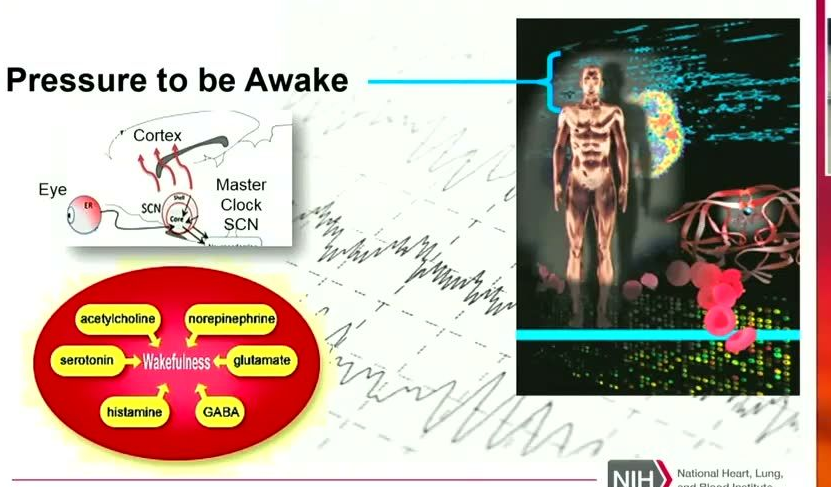
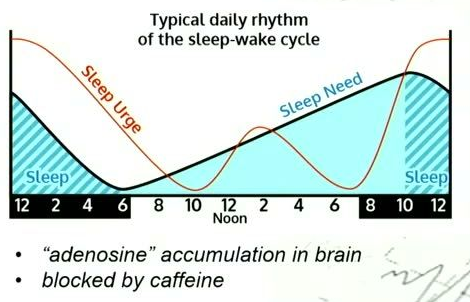
But wakefulness has a counterpart: a separate pressure to sleep. Scientists in the past gave this process the mysterious label 'process S,' back when they lacked the tools to measure its underlying chemistry. Today the process has been studied in detail. The core mechanism is the accumulation of a neurotransmitter called adenosine as a person stays awake. Adenosine builds up over the waking hours, and as it accumulates, it drives the feeling of getting closer and closer to being genuinely sleepy.
When this accumulating adenosine pressure combines with the clock-driven, eyeball-driven process of light exposure, the result is what is called sleep urge. Sleep urge follows a distinctive daily pattern: it is low in the morning, shows a small bump in the afternoon, and then rises again at night as the desire for sleep builds. This pattern reflects the combination of two separate forces—the accumulating urge to sleep from adenosine, and the timing signal from the wakefulness-driving clock system—layered on top of each other and varying together across the course of a day.
Staying Synchronized
Given that wakefulness and sleep pressure are both actively driven processes, the natural question becomes how to keep the brain synchronized with the rest of the world. There is real control available here, and it comes down to two main levers. The first is light—specifically blue and green light. The light coming from a bright screen looks white, but physically it is a combination of many different colors, and certain wavelengths of blue and green are exactly what the chemistry of the eye is most sensitive to. That sensitivity is part of how the eye signals to the brain that it is daytime.
The second lever is sleep schedule, and this one is entirely a matter of personal responsibility. Once a person is an adult, there is no law dictating when they must go to sleep—it falls into the same category as eating right or exercising: something the body needs, but something only the individual can enforce. The underlying principle is simple: regular to bed, regular to rise. The body operates on a schedule, and that schedule works best when it is kept consistent.
The trouble is that many people do not keep it consistent. A familiar pattern is getting up early, say five in the morning, to commute during the workweek, then coming home late in the dark, and then sleeping in on weekends because it feels comfortable and restorative—which it genuinely can be, in the moment. But shifting wake time between weekdays and weekends is a form of stress on biological rhythm, because it amounts to pushing and pulling the system in opposite directions. After a weekend of sleeping in, Monday morning arrives and the process has to be disturbed all over again by getting up early, and the rhythm has to readjust from scratch.
Chapter 5
Sleep Timing, the Heart, and Sleep Apnea
Food, Exercise, and Sleep as Body Cues
Weekends often bring a sudden shift in schedule—later meals, later wake times, a different rhythm to the day entirely. That shift challenges the body's chemistry, because it abruptly changes the timing the body has come to expect. This kind of schedule stress is now drawing research attention, precisely because of how it affects health.
Food is one of the most powerful cues the body uses to set its internal clock, and both what is eaten and when it is eaten matter. Human eating patterns evolved for daytime, not for midnight indulgence. A late-night meal of pizza or chocolate cake sends the body a mismatched signal, because its chemistry is not prepared to process that kind of food at that hour—and some people pay a price for it. Fats in particular act as a strong signal to the body's chemistry, telling it that this is a time to be awake and active. Eating heavy, fatty foods late at night therefore works against the body's own timing system rather than with it.
Exercise functions the same way. It tells the body to breathe more deeply, signals that this is daytime, and reinforces that this is not a time for sleep. Exercising in the middle of the night can feel good—it may clear the mind—but it creates a conflict between the drive to exercise and the drive to sleep. Since the long-term goal is to keep the body's chemistry running on a regular schedule, much like an engine that lasts longer when it runs consistently, the timing of exercise deserves the same attention as the timing of meals.
When Sleep Rhythm Breaks Down
Sleep deficiency—whether it comes from insufficient sleep, irregular sleep, or poor-quality sleep—weakens the body's underlying push-pull rhythm. It is much like trying to keep a clock on schedule when something keeps interfering with its mechanism: the timing simply stops working properly.
The consequences ripple outward from there. Poor sleep raises stress hormones and elevates sympathetic tone—the adrenaline-like activation of the nervous system—which in turn increases the pressure the heart works against, making it work harder than it should. Sleep also regulates the energy supply inside cells, driving the mitochondria that act as the body's batteries and maintaining the redox balance that keeps cellular chemistry in order. When sleep is poor, that energy supply becomes disrupted, and cells cannot function correctly without the right energy available to them.
This same energy disruption reduces DNA repair, since repair depends on the same oxidative balance that poor sleep throws off. The day-night cycle is set up so that certain hours are devoted to detoxifying the body and others to repairing tissue, and this division of labor is controlled by the internal clock. When that clock is disrupted, so is the balance between detoxification and repair. Cell proliferation also suffers: the body fails to replace all the cells it needs to, and more abnormal cells appear as a result. Since intact, accurate cells are what the immune system depends on to function properly, this failure of renewal has consequences for immune health as well.
Taken together, a lack of good sleep health affects the brain, the liver, and a wide range of other organ systems. Researchers are now investigating a long list of disease conditions connected to poor sleep—one that spans essentially every major system and disease pathology in the body.
Circadian Timing Inside the Heart
Researchers have only recently discovered how the circadian clock operates inside heart muscle cells themselves. The oscillation of that clock affects the genes of heart muscle cells in a way that is strongly dependent on the time of day, and it also affects contractility in experimental models—meaning the strength of the heart, its very ability to contract, can change according to when in the day it is measured.
Heart rate itself varies with time of day, and this variation is driven in part by the heart's electrical system. That electrical system depends on proteins embedded in cell membranes that allow electrical signals to pass through the heart, and the expression of those channel proteins is itself clock dependent. Heart metabolism and energy supply follow the same pattern: without the right energy delivered at the right time, the heart's timing goes wrong, and that mistiming can begin to show up as disease and pathology. This is a frontier that researchers have only really begun to unfold in the last couple of years.
This circadian dependence has real consequences for cardiovascular disease. Researchers have shown for decades that heart attacks, irregular heart rhythms known as arrhythmia, sudden cardiac death, and stroke all appear to be strongly circadian dependent—these conditions tend to be worse at certain times of day, and people are more likely to die from them during particular windows of the day rather than uniformly across the clock.
Sleep Apnea and Cardiovascular Strain
Sleep apnea is now a familiar term, though that was not always the case—decades ago, few people would have recognized it. Apnea occurs when air coming in through the nose or mouth is blocked, partially or fully, and cannot reach the lungs. Struggling to breathe is never a good sign; breathing is meant to be easy, not a fight.
When apnea occurs, researchers have found that the body experiences insufficient oxygen, or hypoxia, and this triggers a surge in stress hormones and adrenaline—both of which are harmful to the heart and the cardiovascular system as a whole. There is also a mechanism that often goes unnoticed: when the airway is blocked and a person cannot inhale or exhale properly, the diaphragm keeps trying to pull air in and push it out anyway. That effort produces pressure inside the chest, and that pressure has to go somewhere—it is applied directly to the heart. This effect has a technical name: intrathoracic pressure swings.
Blocked breathing also causes carbon dioxide to build up inappropriately, which sends alarm signals to the brain known as arousals. These arousals disturb sleep throughout the night—the experience has been described as being like a nightmare, with the body repeatedly jolted out of restful sleep by its own emergency signaling system.
There is now a substantial body of data on what chronic apnea does to the body over time. It increases inflammation, causes tissue damage, and contributes to metabolic disease, including effects on glucose metabolism and blood coagulation. Ultimately, it erodes the ability of blood vessels to remain healthy. For the person experiencing it, that vascular erosion translates into concrete outcomes: high blood pressure, irregular heartbeats, and coronary artery disease—in other words, heart disease itself.

Chapter 6
Sleep Disorders and the Bigger Picture of Health
Types of Sleep Disorders
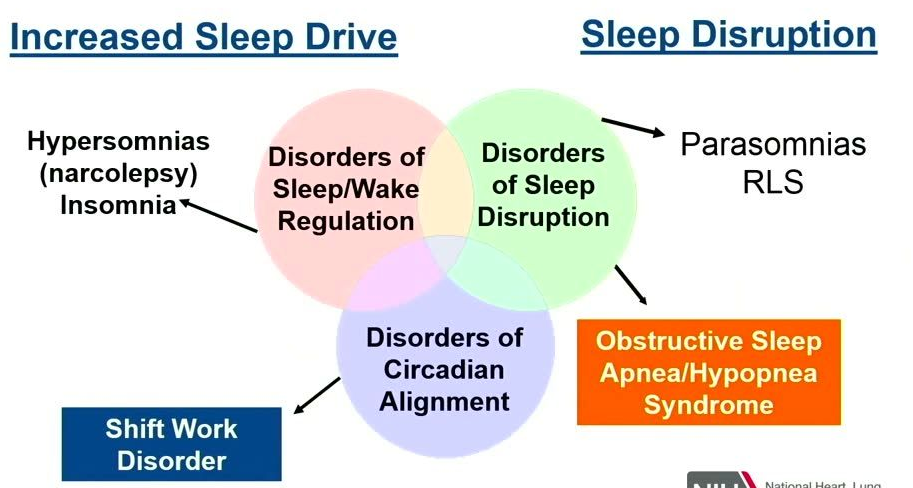
The discussion of sleep apnea produced clear results: in several large studies, more severe cases were associated with hypertension, heart disease, and, depending on severity, higher rates of mortality. But sleep apnea is only one entry in a much longer list. There are actually over 70 different sleep disorders, and it would be a disservice to treat sleep apnea as though it were the whole story.
Rather than walking through all 70-plus conditions individually, it helps to see how they cluster into three broad categories. The first category concerns disorders of sleep-wake regulation: problems with how much sleep drive a person has or how well they can stay awake. Narcolepsy falls here, as do the more familiar terms insomnia and hypersomnia.
The second category covers disorders that disrupt sleep directly once a person is asleep. Restless leg syndrome is a common example, and this group goes by the technical name parasomnias. The third category is about circadian alignment—how well the timing of a person's internal clock matches the external, environmental clock. Disruptions in this alignment form their own distinct class of sleep problems.
- Sleep-wake regulation disorders — problems with sleep drive or the ability to stay awake (e.g., narcolepsy, insomnia, hypersomnia)
- Sleep disruption disorders — conditions that disrupt sleep directly, technically called parasomnias (e.g., restless leg syndrome)
- Circadian alignment disorders — mismatches between the internal clock and the external clock
Sleep, Society, and Health Disparities
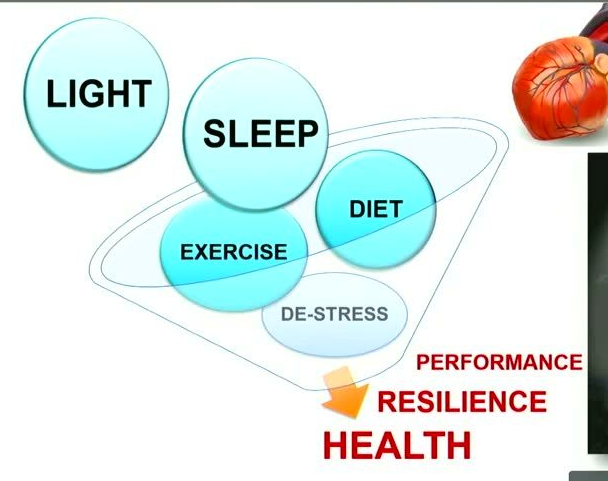
Zooming out from specific disorders, the larger point is that light, sleep, diet, and exercise are tied together. These are not separate boxes to check independently; a person cannot separate them and still expect to maintain their health. Each activity influences the others, and treating any one of them in isolation misses the way they actually function as a connected system.
This interconnection extends further, into the interaction between sleep, society, the environment, and health—an area described as genuinely intriguing and an active target for more research. One clear example: short sleep is much more common in certain low-income areas. It is associated with poverty and appears more frequently in some neighborhoods than others. There are also documented race differences in the likelihood of getting insufficient sleep. Taken together, these patterns make insufficient sleep a nationally recognized problem, one that combines biology, environment, and social circumstance rather than reducing to any single cause.
Practical Steps for Better Sleep
With the science laid out, the practical question becomes: how does a person actually prepare for sleep? The first and most basic recommendation is to establish a routine. If falling asleep is difficult, late-day stimulants should be avoided. Calming activities help too—warm baths are one example, and they work well with the body's own chemistry as it winds down for the night.
Light deserves special attention. The advice is to use as little light as possible in the evening, or at least low light, and specifically to minimize blue and green wavelengths, since the brain interprets these as signals to be awake. This matters because ordinary white light contains blue and green light within it, so simply dimming a white light does not remove the wakefulness signal.
New lighting technology is emerging—well beyond what is currently available at a typical hardware store—that removes blue and green light specifically at night, without changing the apparent color of the light at all; the eye cannot detect the difference. This is presented as a promising development to watch for, even if it is not yet widely available.
Beyond light, the bedroom environment itself matters. The room needs to be quiet—if outside noise is unavoidable, such as living next to a train track, earplugs or another strategy can help. The room also needs to be dark, and a cool temperature works best, since the body naturally tends to cool through the night as part of its normal sleep process.
- Keep a consistent routine before bed
- Avoid late-day stimulants if sleep is difficult
- Use calming activities, such as a warm bath
- Minimize light in the evening, especially blue and green wavelengths
- Keep the bedroom quiet, dark, and cool
Sleep trouble can be maddeningly inconsistent—good one night, difficult the next—which makes it hard to know what is actually going wrong. One useful strategy is to keep a sleep diary. If excessive daytime sleepiness becomes an ongoing, continuing problem, it is worth discussing these symptoms with a physician and bringing the sleep diary along, since it gives a doctor a concrete record of the pattern rather than a vague impression.
The long-standing mantras for health have been exercise, diet, and de-stressing. To these, the case for adding light and sleep as equally important factors has been laid out across this material. Together, these elements are framed as protecting health across a lifetime, supporting the best possible resilience to stress, and sustaining performance—since performance, in this sense, is part of a person's lifetime achievement.
A common frustration illustrates the problem: the advice to keep the same sleep schedule on weekdays and weekends collides with real life when a person's natural rhythm—waking around 7:30 or 8:00—clashes with a 5 a.m. weekday start. This situation is not rare; everyone has real-life obligations that constrain their sleep choices.
The point of the information is not to demand a perfect, uniform schedule regardless of circumstance, but to give people the tools to achieve the best lifestyle they can manage, and to make choices going forward that might improve things further. Everyone, year after year, faces these same tradeoffs and decisions.
We all have life obligations. The opportunity here is to take the information and use it to achieve your best lifestyle that you can, and to make choices in the future that may improve it further.
Chapter 7
Common Questions: Jet Lag, Children, and Melatonin
Jet Lag and Social Jet Lag
Everyone recognizes jet lag as the disoriented, out-of-sync feeling that follows a long flight across time zones. But the same underlying mismatch shows up in a much more common form: the shift between a weekday schedule and a weekend one. Scientists call this social jet lag—a term that, admittedly, does little to make the concept more intuitive, but it points to a real phenomenon.
Staying up later and sleeping in on weekends, then snapping back to an early alarm on Monday, subjects the body to the same kind of schedule disruption as crossing time zones, just on a smaller scale. In that sense, nearly everyone is practicing some version of jet lag on a regular basis, whether or not they ever board a plane.
For true travel-related jet lag, researchers—including those at NASA, who have studied circadian adaptation extensively given how often astronauts cross effective time zones (the International Space Station circles the Earth roughly every ninety minutes)—have converged on a few practical strategies.
The comparison offered is to skipping a dose of medication: the body's systems get thrown off schedule, and the fix is to help them get back on track as gently as possible. One of the most consistently recommended approaches is simply to sleep as much as possible during travel, and to avoid heavy eating on the flight. Both measures help the body connect more quickly to the schedule at the destination.
Even with good strategies, adjustment isn't instantaneous. It typically takes three to five days to adapt to a new time zone, or roughly one day per time zone crossed on average, though the exact pace depends on the direction of travel. For some travelers this is a minor inconvenience; for others, flying to a place like Australia or Japan can genuinely disrupt the early part of a vacation. Recognizing jet lag as a predictable, temporary process—rather than a personal failing or a sign that something is wrong—can make it easier to plan around and wait out.
How Children's Sleep Differs
When it comes to children's bedtimes, there is no single number that fits every child. The exact timing of sleep varies from individual to individual and depends heavily on each child's schedule. What can be said with more confidence is the amount of sleep needed at different ages. Depending on their age, children may need at least nine hours of sleep, and often more. For very young children, that figure can rise to around fifteen hours. Newborns need even more than that.
Immediately following birth, babies sleep almost continuously. This isn't simply because infants are tired; it reflects the fact that the part of the brain responsible for regulating the sleep-wake cycle has not yet finished developing. That regulatory system is still being built in the first months of life. As a result, a newborn's sleep is scattered across the day and night without much pattern.
It's during those first few months after birth that the transformation becomes visible: a baby begins to stay awake more during the day and sleep more consolidated at night. Sleep starts to condense around a day-night pattern, gradually organizing itself the way it will function for the rest of childhood and adulthood. This shift happens precisely because the brain is still developing—the maturing circadian and sleep-regulation systems are what allow the daily rhythm to take shape.
The Science and Limits of Melatonin
A question about chronic melatonin use arose in a specific and common context: children who take stimulant medication for ADHD and then take melatonin regularly to help them sleep afterward. Is there any contraindication to that kind of long-term use? The honest answer is that specific research addressing this exact situation does not yet exist. This is precisely the kind of case—where a person is managing one or more medical conditions simultaneously—where the science is still imperfect and more research is needed.
In the absence of definitive research, physicians rely on clinical judgment. Conditions such as depression or ADHD are often treated with drugs that affect sleep, yet those drugs are also necessary to manage clinically significant symptoms. Finding the right balance between symptom control and healthy sleep is something a patient and physician work out together, through practice and ongoing adjustment, rather than through a fixed formula.
Melatonin itself is more complicated than simply taking a pill before bed. Its effect depends heavily on exactly when it is taken. Normal biology has melatonin peaking in the evening, as part of how the body prepares for sleep. But that peak is very sensitive to suppression by light—particularly the blue and green spectra of light common in screens and household lighting. If melatonin doesn't peak the way it normally would, the body's signal to organize itself for sleep is weakened, which for some people can contribute to symptoms of insomnia.
This raises the practical question of when to take melatonin as a supplement. Taking it around the time one would normally lie down is a reasonable starting point, but even that isn't a complete answer, because not everyone benefits from taking melatonin in the same way. Like many other body systems, there is variation between individuals—polymorphisms whose precise clinical significance is still being worked out. The research on which of these variations matter most, and how, is ongoing, so guidance on melatonin timing and effectiveness remains an incomplete answer rather than a settled one.
This gap matters clinically. Some people keep good, stable time with day and night, and others do not—and that difficulty keeping time is itself part of certain sleep conditions. But without an easy, objective way to measure sleepiness or circadian phase, physicians cannot precisely sort out these problems with a simple test. Instead, they try different approaches based on clinical experience, adjusting as they learn how an individual patient responds.
Chapter 8
The Future of Sleep-Friendly Lighting
Tuning Light to the Time of Day
New lighting technologies are moving from development into production, and they rest on a simple but powerful capability: the electronics behind solid-state lighting, including LEDs, can be regulated with remarkable precision, regardless of whether the light source is a television, a laptop screen, or a household fixture. These electronics can be tuned to deliver very specific kinds of light, and, importantly, they can remove a specific part of the spectrum, the part that affects the eyes in ways relevant to sleep and wakefulness.
That precision opens a door. If a fixture can selectively shape its spectrum, it can, in principle, also know what time of day it is and adjust accordingly, delivering the light dose needed during waking hours while easing back on the specific spectral content that interferes with sleep once night falls. The vision is lighting that actively supports the body's daily rhythm rather than working against it: enough of the right kind of light by day, and a gentler, less disruptive light by night.
This idea raises a natural question: would it mean having separate devices for different settings—a bedroom television with one kind of light and a kitchen television with another, the bedroom version tuned to be more sleep-friendly? Separate devices would not be necessary. A single device could be built to handle both functions, adjusting its own output as needed rather than requiring different hardware for different rooms or times of use.
It's worth being clear about what this technology is not. It is not simply lighting that changes color, the way a decorative bulb might shift from blue to red. The goal is different: producing a distinct light quality, a different spectral makeup, engineered specifically to elicit the physiological response appropriate to the time of day. The distinction matters because color and spectrum are not the same thing, and the sleep-relevant effects of light depend on spectral content rather than simply what color the light appears to be.